April 11, 2026/
No Comments
Golden seared chicken thighs nestled in a white ceramic pan filled with creamy lemon rice, garnished with fresh parsley and...

Golden seared chicken thighs nestled in a white ceramic pan filled with creamy lemon rice, garnished with fresh parsley and...
Let me ask you something. When was the last time you sat down to eat dinner and actually enjoyed the quiet? Not...
Tired of the Tuesday dinner scramble? Discover how to break the midweek cycle of stress and takeout. Real recipes, mindset...
Tired of boring weeknight meals? Tom Tuesday Dinner serves up 30-minute recipes, easy cleanup tips, and a fresh approach to...
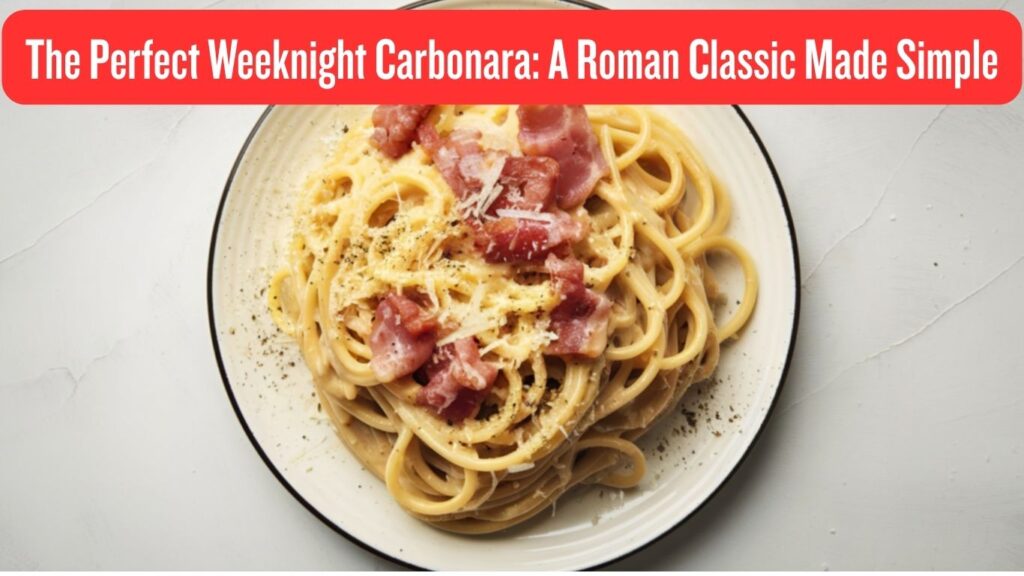
Master authentic Italian Carbonara in 20 minutes. Creamy, rich, and utterly satisfying—your new favorite Tom Tuesday Dinner awaits.
There’s something almost magical about Italian cooking. It whispers secrets across generations—that the most profound pleasures often come from the simplest places. And nowhere is this truth more beautifully demonstrated than in a bowl of perfect Carbonara.
I still remember the first time I tasted real Carbonara in a tiny trattoria near Rome’s Trastevere neighborhood. The owner, a nonna named Elena with flour-dusted hands and eyes that crinkled when she smiled, set down a bowl that looked almost plain. Just pasta, a gleam of something silky, and scattered bits of guanciale. But one forkful stopped time. It was creamy without being heavy, rich without cream (heresy to even suggest!), and so deeply satisfying that I nearly wept at its perfection.
For years afterward, I chased that memory. I tried restaurant versions that drowned the pasta in thick, cream-laden sauces. I attempted complicated recipes that demanded twelve ingredients and more patience than a Tuesday night could offer. And then, finally, I understood Elena’s secret—the one that every Italian nonna knows in her bones:
Simple ingredients, handled with intention, become something extraordinary.
That’s the philosophy we live by here at Tom Tuesday Dinner. And today, I’m sharing the Carbonara recipe that finally brought me back to that Roman trattoria. It takes twenty minutes. It uses five ingredients you can find anywhere. And it will transform your Tuesday night into something genuinely special.
Let’s be honest for a moment. Weeknight cooking comes with constraints. You’re tired. You’re hungry. The last thing you need is a recipe that demands constant attention or leaves you with a mountain of dishes.
This Carbonara respects your evening while delivering food that tastes like it came from a restaurant with white tablecloths and a wine list as long as your arm. Here’s why:
The Five-Ingredient Promise. Pasta, eggs, cheese, cured pork, black pepper. That’s it. No cream. No garlic. No parsley floating on top pretending to be authentic. Just the essentials, each one pulling its weight and then some.
The Twenty-Minute Timeline. From boiling water to twirling pasta on your fork, you’re looking at less time than it takes to decide what to watch on Netflix afterward.
The Technique That Transforms. Most people who claim to dislike Carbonara have only ever had a bad version—gluey eggs, greasy meat, pasta swimming in sadness. But when you nail the emulsion, when the eggs transform into liquid gold rather than scrambled sadness? That’s when you understand why this dish has survived for generations.
Because this recipe uses so few components, each one matters enormously. This isn’t the time for substitutions born of desperation. Treat yourself to good ingredients, and the dish will treat you right back.
Pasta (320g / 12 oz). Spaghetti is traditional, but I’m partial to rigatoni or mezze maniche—the ridges catch the sauce and hold it like tiny flavor cups. Pecorino grinds itself into every crevice, and each bite becomes a perfect moment. Use a good bronze-die pasta if you can find it; the rough texture helps the sauce cling.
Eggs (4 large). You need both whole eggs and yolks. The ratio matters: two whole eggs plus two additional yolks gives you richness without crossing into custard territory. Use the best eggs you can find—farms, farmers markets, the ones with orange yolks that stand tall in the pan. They make a difference you can taste.
Cheese (100g / 3.5 oz, grated). Here’s where many recipes go wrong. Pecorino Romano is the authentic choice—salty, sharp, unmistakably Roman. But some find it too aggressive alone. My compromise? Two-thirds Pecorino, one-third Parmigiano-Reggiano. The Parmigiano adds nutty depth while the Pecorino brings the necessary bite. Grate it yourself from a block; pre-grated stuff contains anti-caking agents that ruin the sauce.
Guanciale (150g / 5 oz). This is cured pork cheek, and it’s the gold standard. Richer than pancetta, more luxurious than bacon, it renders fat that becomes the foundation of your sauce. If you absolutely cannot find guanciale, good pancetta works. Bacon is a distant third option—use it only in emergencies, and expect a smokier, less refined result.
Black Pepper (Freshly cracked). Not pre-ground pepper from a can. Whole peppercorns, cracked roughly with a mortar and pestle or the bottom of a heavy pan. Toast them briefly in the pork fat, and they become warm and aromatic rather than just spicy. This is non-negotiable.
Fill a large pot with water and set it over high heat. When it boils, salt it generously—it should taste like the sea. Pasta cooked in undersalted water is forever bland, no sauce can fully rescue it.
While the water heats, arrange your ingredients nearby. Carbonara moves quickly at the end, and you don’t want to be hunting for a bowl while your eggs scramble.
Cut your guanciale into thick matchsticks—lardons, the French call them, but we’re in Rome now. About half an inch thick, an inch and a half long. They’ll shrink as they cook, so don’t go too thin.
Place them in a cold skillet large enough to hold all your pasta later. Then turn the heat to medium. This slow rendering is crucial: the fat melts gradually, the meat browns without burning, and you end up with crispy edges and tender centers.
Cook until golden and crisp, about 6-8 minutes. Then turn off the heat. You’ll reheat this pan later, but for now, let it rest.
While the pork renders and the water boils, make your cheese-egg mixture. In a medium bowl, crack the two whole eggs and add the two additional yolks. Whisk them together until homogeneous—no streaks of white remaining.
Add your grated cheeses and a generous amount of freshly cracked black pepper. Whisk again until it forms a thick, fragrant paste. It will look almost too thick, like wet sand. This is correct. The pasta cooking water will loosen it later.
Add your pasta to the boiling water. Set a timer for two minutes less than the package suggests. You want it al dente with some resistance—it will finish cooking in the pan.
Just before draining, scoop out a full cup of that starchy water. This is liquid gold, the bridge between your ingredients. Set it aside.
Here’s where confidence matters. Reheat the skillet with the guanciale over medium heat. When it’s sizzling, use tongs to transfer your pasta directly from the pot into the skillet. No draining necessary—a little clinging water is your friend.
Toss the pasta with the pork, coating every strand in that rendered fat. Remove the pan from the heat completely. This next part happens off the flame.
Working quickly, pour about half of your egg-cheese mixture over the pasta. Toss vigorously with tongs, adding splashes of the reserved pasta water as you go. The residual heat cooks the eggs gently, creating a creamy emulsion rather than scrambled pieces. Add more egg mixture, more water, tossing constantly until every strand gleams and the sauce coats the pasta like velvet.
The texture should be loose enough to flow, thick enough to cling. If it seems tight, add more pasta water. If it seems thin, toss another moment—it will thicken as it rests.
Divide the pasta immediately into warm bowls. Top with extra grated cheese, another crack of black pepper, and maybe a few crispy bits of guanciale reserved just for this moment.
Serve at once. Carbonara waits for no one.
Curdled Eggs. This happens when heat is too high or direct. By removing the pan from the burner before adding the eggs, you create gentle, indirect cooking. The pasta water also tempers the mixture gradually.
Gummy Pasta. Overcooking is the enemy. Undercook by those two minutes, finish in the pan, and your pasta will retain integrity.
Greasy Sauce. If your guanciale rendered too much fat, spoon out some before adding the pasta. About three tablespoons is plenty.
Bland Results. Salt your water aggressively. Use good cheese. Crack pepper generously. Trust your ingredients.
While I’m a purist at heart, even I appreciate small adaptations that respect the original while acknowledging reality:
Vegetarian. Omit the pork entirely, and instead sauté mushrooms with garlic and thyme until deeply browned. The umami from mushrooms mimics some of the savory depth you lose without meat.
Weekend Warrior. Add a handful of fresh peas in spring, or asparagus tips when they’re in season. Neither is traditional, but both add color and freshness without overwhelming.
Spicy. Infuse your pork fat with a dried chili or two before adding the pasta. The heat should whisper, not shout.
In our rush-through lives, dinner too often becomes fuel rather than ritual. We eat standing at counters, scrolling through phones, barely tasting what passes our lips. But food this simple, this honest, demands more.
When you make this Carbonara—when you crack those eggs and grate that cheese and watch humble ingredients transform into something transcendent—you participate in a tradition centuries old. You connect with every Roman cook who ever fed her family from this same combination of pantry staples.
The beauty of Italian cooking isn’t complexity. It’s the profound understanding that excellence lives in the details. A perfect egg from a happy chicken. Pork cured with patience. Cheese aged with care. Pepper cracked fresh. These things, combined with intention and attention, become dinner worth sitting down for.
So here’s your invitation. Tonight, or whenever Tuesday finds you, make this Carbonara. Set the table. Pour a glass of something Italian and unpretentious. Twirl that pasta onto your fork and taste what happens when simplicity meets skill.
You might not be in Rome. But for twenty minutes, with one perfect bite after another, you’ll understand why the Romans have been making this dish forever.
And you’ll know exactly why we keep coming back to the kitchen, night after night, chasing that feeling.
Made this recipe? Tag us in your Carbonara creations! We love seeing your Tuesday night triumphs.
Buon appetito from all of us at Tom Tuesday Dinner.
Golden seared chicken thighs nestled in a white ceramic pan filled with creamy lemon rice, garnished with fresh parsley and lemon slices. Let me paint a picture for you. It’s 6:15 PM on a Tuesday. The kids are asking for snacks. Your inbox is still blowing up. And you are staring into the fridge thinking, “I really don’t want to scrub three pots and a baking sheet tonight.” I have been there. More times than I can count. That is exactly why I fell in love with this One Pan Lemon Herb Chicken and Rice. It is the recipe equivalent of a superhero. It shows up, saves the day, and leaves almost no mess behind. This isn’t fancy restaurant food. It is better than that. It is comforting food. The chicken gets beautifully golden and crispy on the outside, but stays juicy on the inside. The rice? Oh, the rice. It soaks up all the chicken juices, the bright lemon, the savory garlic, and the fresh herbs. By the time dinner is ready, that rice is the creamiest, most flavorful thing you have ever pulled from a single pan. And the best part? You only wash one pan. Just one. Let me show you how to make your Tuesday night a little bit easier, and a whole lot tastier. Why This Recipe Works (And Why You Will Love It) Before we jump into the ingredient list, let me tell you why this specific recipe has become a reader favorite on Tom Tuesday Dinner. Ingredients List Grab these items on your next grocery run. Everything here is easy to find at any standard grocery store (Walmart, Kroger, Target, or your local market). For the Chicken: For the Rice & Sauce: The Herbs (Fresh is best here): Substitutions & Variations Cooking for picky eaters? Out of an ingredient? No problem. Here is how to swap things around. Step-by-Step Cooking Instructions Alright, roll up your sleeves. Or don’t. This is an easy one. Let’s get cooking. Step 1: Prep & Preheat Preheat your oven to 375°F (190°C) . You want the oven hot enough to finish cooking the chicken and fluff the rice, but not so hot that the rice burns on the bottom. Take your chicken thighs out of the fridge. Pat them super dry with paper towels. This is the secret to crispy skin. If the skin is wet, it will steam instead of getting golden brown. In a small bowl, mix the salt, pepper, and garlic powder. Rub this all over the chicken thighs (both sides, but focus on the skin side). Step 2: Sear the Chicken Place your oven-safe skillet (a 12-inch cast iron skillet or a stainless steel pan works best. Do not use a nonstick pan with a plastic handle.) on medium-high heat. Add the olive oil. Once the oil is shimmering (hot!), carefully place the chicken thighs skin-side down. Do not crowd the pan. If you have to work in two batches, do it. Crowding lowers the heat and ruins the sear. Let them cook undisturbed for 5-6 minutes. Resist the urge to peek! You want a deep, golden-brown crust. Flip them and cook the other side for 2 minutes. Remove the chicken to a plate. It will not be cooked through yet, and that is fine. Step 3: Build the Flavor Base Pour out all but 1 tablespoon of the chicken fat from the pan (leave those brown bits stuck to the bottom—that is pure flavor called “fond”). Turn the heat down to medium. Add the butter. Once melted, toss in the diced onion. Cook for 3-4 minutes until soft and translucent. Scrape the bottom of the pan with a wooden spoon to release those brown bits. Add the minced garlic and lemon zest. Stir for 30 seconds until you smell the garlic. Be careful not to burn the garlic (burnt garlic is bitter). Step 4: Toast the Rice Pour the dry rice right into the pan. Stir it around with the onions and butter. Let it toast for 1-2 minutes. You will hear it crackle a little. Toasting the rice gives it a nutty flavor and prevents it from turning into mush later. Step 5: Deglaze & Simmer Pour in the chicken broth and the heavy cream. Add the juice of 1.5 lemons (save the other half for garnish). Stir in the fresh thyme and the Parmesan cheese. Bring this mixture to a gentle simmer. Taste the liquid right now. Does it need more salt? Add a pinch. Remember, the rice will absorb the liquid, so it should taste slightly saltier than you want the final dish to be. Step 6: The Magic Happens Turn off the heat on the stovetop. Nestle the seared chicken thighs back into the rice, skin-side up. The rice should cover the bottom, but the chicken should be sitting on top like a throne. Transfer the skillet to the preheated oven. Bake, uncovered, for 25-30 minutes. Pro tip: Place a baking sheet on the rack below your skillet just in case it bubbles over. Oven messes are no fun. Step 7: The Rest is Crucial This is the hardest part. When the timer goes off, the kitchen smells incredible. You will want to dig in immediately. Don’t. Remove the pan from the oven. Sprinkle the fresh parsley over the top. Cover the skillet loosely with a piece of aluminum foil (or a lid if your pan has one). Let it rest on the counter for 10 minutes. During this rest, the rice absorbs the last bit of liquid and firms up perfectly. The juices in the chicken redistribute. If you skip this, the rice will be soupy. Patience, my friend. How to Know It’s Perfect Nutritional Value (Per Serving) This recipe serves 4 hungry people (2 thighs each). I know we don’t usually obsess over numbers, but for my readers tracking their macros, here you go. Note: Values are estimates and vary based on specific ingredients (heavy cream vs half & half). Is it a “light” dinner? No. But is it a balanced, hearty meal that will keep you full until breakfast? Absolutely. Pair it with a simple green salad or roasted broccoli
Let me ask you something. When was the last time you sat down to eat dinner and actually enjoyed the quiet? Not scrolling through bad news. Not worrying about tomorrow. Just you, a plate of food, and maybe a little bit of weirdness to make you smile. If that sounds nice, then let me introduce you to someone. His name is Tom. He is a cartoon tomato. And he wants to have dinner with you. Every Tuesday. Wait… a tomato? Yes. A tomato. But not just any tomato. Tom looks like a drawing a kindergartner would make after three cups of apple juice. He has two big, round eyes. A tiny little mouth that somehow looks both smug and friendly. And sometimes – if he’s feeling fancy – he wears a black tuxedo. Why? No one knows. And that is exactly why people love him. Tom Tuesday Dinner started as a tiny joke on the internet. Someone posted a crude drawing of a tomato and said, “It is Tuesday. You know what that means. Tom Tuesday Dinner.” There was no explanation. No recipe. No rules. And somehow, that was perfect. Now, thousands of people across the world stop what they are doing every Tuesday evening. They cook (or microwave) a simple meal. They take a blurry photo. And they post it online with the caption: “Having dinner with Tom.” It sounds ridiculous. It is ridiculous. But stick with me. Because once you understand Tom, you will realize he is exactly what the internet needed. Why Tuesday? Why not Friday? Great question. Friday is for going out. Saturday is for parties. Sunday is for crying because Monday is coming. But Tuesday? Tuesday is the most forgettable day of the week. Monday is painful, but at least you notice it. Wednesday is “hump day” – you have a goal. Thursday is almost Friday. Tuesday is just… there. You are tired from Monday. You have no energy. The week is still very long. That is where Tom comes in. Tom Tuesday Dinner is an excuse. A permission slip. A gentle nudge that says: “Hey. Stop working. Stop worrying. Just eat something. I don’t care if it’s frozen pizza. I don’t care if it’s buttered noodles. Just sit down and eat with me.” And for some reason, that simple invitation makes people feel better. What do you actually do for Tom Tuesday Dinner? I am glad you asked. Because it is very easy. Almost embarrassingly easy. Here is the step‑by‑step guide. No fancy cooking skills required. Step 1: Check the calendar. Is it Tuesday? Yes? Great. No? Then close the fridge. You are not ready. Tom is patient. Tom will wait. Step 2: Open the website. Go to tomtuesdaydinner.com on your phone or computer. You will see Tom staring back at you. Maybe a countdown timer. Maybe just his face. That is your dinner guest. Put your phone on the table. Prop it against the salt shaker. Now Tom is sitting with you. Step 3: Make dinner – the lazier, the better. This is very important. Do not try to impress Tom. Tom does not want a five‑course meal. Tom does not want organic, farm‑to‑table, hand‑crafted artisanal pasta. Tom wants the food you eat when no one is watching. That means: Step 4: The toast. Before you take your first bite, look at Tom on your screen. Say something. Anything. Some people whisper “For Tom.” Some people clink their fork against their glass. Some people just nod. There is no wrong way. Tom is not a judge. Tom is a friend. Step 5: Take the worst photo you have ever taken. Seriously. Do not try to make it pretty. Do not use a filter. Do not arrange the food nicely. Take a blurry, poorly lit photo. Maybe your thumb is in the corner. Maybe the flash makes everything look weird. That is perfect. Post it on Instagram, Twitter, TikTok, or wherever you hang out. Use the hashtag #TomTuesdayDinner. Then watch as strangers from around the world comment things like: Step 6: Eat. Enjoy. Relax. That is it. No cleanup crew. No rules. No pressure. You just ate dinner with a cartoon tomato. And somehow, you feel a little less alone. Where did Tom actually come from? The true origin of Tom Tuesday Dinner is a mystery. And honestly, that makes it better. Some people say Tom first appeared on a live stream. Others say he was born in a random Discord server. A few people swear they saw a drawing like him on an old forum from 2015. The truth is: no one knows. And the person who runs the website has chosen to stay anonymous. That means Tom belongs to everyone. He is not a corporate mascot. He is not a marketing campaign. He is just a silly drawing that made people laugh, and then it kept making people laugh, and now it is a whole thing. The website itself is very simple. You will find: There is no advertising. No pop‑ups. No “sign up for our newsletter.” Just Tom. Why do people love this so much? Let me tell you a secret. We are tired. Social media has taught us to be perfect. Your dinner has to be beautiful. Your body has to be fit. Your life has to be an inspiration. But Tom Tuesday Dinner is the opposite of that. Tom celebrates the mediocre meal. The lazy Tuesday night. The dinner you eat in sweatpants while watching the same show for the tenth time. When you post your sad bowl of cereal under the #TomTuesdayDinner hashtag, no one makes fun of you. No one says “eat healthier.” No one compares your meal to a celebrity chef’s. They just say: “Tom approves.” That feeling – of being accepted exactly as you are, with your burnt garlic bread and your messy kitchen – is rare on the internet. Tom gives you permission to stop trying so hard. And that is why thousands of people show up every Tuesday. The best inside jokes (so you
Tired of the Tuesday dinner scramble? Discover how to break the midweek cycle of stress and takeout. Real recipes, mindset shifts, and the simple joy of owning the night. Introduction: The Day Dinner Plans Go to Die Let’s be honest with each other for a second. Sunday lunch is a slow, glorious event. Thursday is the “almost Friday” pre-game. But Tuesday? Tuesday is the black sheep of the weeknight calendar. For years, Tuesday at 5:00 PM was my personal white flag. You know the feeling. The energy from Monday has evaporated. The weekend is a distant memory. You open the fridge, stare into the abyss of half-used condiments and a wilting bag of spinach, and suddenly, scrolling through a food delivery app feels like the only logical adult decision. But here’s the thing I learned after too many greasy pizza boxes and cold french fries: Tuesday deserves better. Welcome to Tom’s Tuesday Dinner. This isn’t a gourmet cooking blog written by a chef with perfect knife skills. I’m just a guy who got tired of the midweek slump. This is a space for real humans who want to break the cycle of the boring dinner rut without spending three hours in the kitchen or needing a degree in culinary arts. Let’s fix your Tuesday. The Psychology of the Slump (And Why We Quit) Before we talk about recipes, we have to talk about your brain. Why does Tuesday specifically feel so hard? It is the ultimate “hump day” predecessor. On Monday, we are fueled by a strange sense of new-week optimism. By Wednesday, we are resigned to the grind. Tuesday sits in a no-man’s-land. The pressure to cook after a full day of work, kids’ homework, and endless Zoom calls often feels like the straw that breaks the camel’s back. When we default to takeout every Tuesday, two things happen: The goal of this site isn’t to turn you into a meal-prepping robot. It is to reclaim Tuesday as a low-stakes, high-reward night. We aren’t hosting a dinner party. We aren’t making Beef Wellington. We are making Tuesday work for us. The Golden Rule of Tuesday Cooking: “Good Enough” Is Perfect If you take nothing else away from this article, memorize this mantra: Perfect is the enemy of done. Scrolling through Instagram reels of perfectly seared scallops or homemade pasta will ruin your Tuesday motivation. Stop comparing your 7:00 PM scramble to someone else’s curated highlight reel. On Tuesday, we celebrate the “Good Enough” meal. A “Good Enough” meal is: When you lower the bar to “Good Enough,” you suddenly realize you have dozens of options hiding in your pantry right now. The Pantry Rescue: Your Tuesday Arsenal You don’t need a grocery store run to have a great Tuesday dinner. You need a strategic stash. Here is my recommended “Tuesday Arsenal.” These are the non-negotiables that live in my kitchen specifically for the midweek rescue. The Carb Foundation (Pick two): The Protein Heroes (Canned or frozen): The Flavor Bombs: The “Emergency” Veggies: If you have these items, you are never more than 15 minutes away from a solid Tuesday dinner. Seriously. Close the delivery app and look at that list. Recipe #1: The Lazy “Everything But The…” Sheet Pan This is my go-to for nights when the motivation is at absolute zero. It requires one pan, one spatula, and zero brain cells. What you need: The 30-Minute Method: Why this works for Tuesday: The sausage flavors the veggies. The high heat creates texture. You just ate a meal with protein, carbs, and greens, and the only thing you have to wash is a knife and a sheet pan. That is a Tuesday victory. Recipe #2: The Pantry “Creamy” Tomato & Chickpeas We need a meatless option that doesn’t feel like punishment. This uses canned goods, so it is always available. It tastes like you simmered it for hours. You didn’t. What you need: The 20-Minute Method: The Texture Trick: Take your spatula and smash about a quarter of the chickpeas right in the sauce. It thickens the liquid naturally without adding flour or cream. Genius, right? How to Build Your Own “Tuesday Template” Recipes are great, but routines are better. I want you to stop thinking about what to cook and start thinking about how you cook. Here is the Tom Tuesday Dinner Template. Step 1: The 5-Minute Fridge AuditBefore you leave for work on Tuesday morning, look in the fridge. What is dying? The mushrooms? The half-onion? The leftover rice from Monday? That is your ingredient of the day. Build the meal around that one dying vegetable. Step 2: The “Cook Once, Eat Twice” RuleWhen you cook rice on Tuesday, make double. When you chop an onion, chop the whole thing. Tuesday night’s leftovers become Wednesday’s lunch salad topping. This isn’t “meal prep”; this is just being lazy-smart. Step 3: The Music VariableThis is the humanized part. Do not cook in silence or while watching the news. Put on a specific “Tuesday Dinner” playlist. Mine is 90s hip-hop and yacht rock. When the music goes on, my brain knows: We are in cooking mode for 20 minutes. Then we eat. It conditions your brain to look forward to the process, not just the result. The “Takeout Trap” vs. The “Fridge Freedom” Let’s do the math. The average family takeout order on a Tuesday (two entrees, an appetizer, delivery fee, tip, tax) runs $45-$60. That is roughly $240 a month just on Tuesdays. That is a car payment. That is a nice weekend getaway. Now, look at the sheet pan recipe above. The sausage ($5), potatoes ($3), broccoli ($3). Total cost: $11. And you likely have leftovers for lunch. I am not saying never order takeout. Takeout is a beautiful gift for Friday night when you are exhausted from the work week. But Tuesday? Tuesday is the day you fight back against the slow bleed of your bank account. Cooking on Tuesday isn’t just about health; it is a financial power move. What To Do When “The Slump” Wins Okay, let’s be real. Some Tuesdays are monsters.